UPU Online A Complete Guide to Applying for Public Universities in Malaysia
Every year, hundreds of thousands of Malaysian students who have just completed their SPM or STPM examinations face the same daunting question, which university programme should they apply for and how does the whole process actually work. The answer almost always begins with one single system, and resources such as http://upuonline.com.my exist to help candidates navigate that system with less confusion and fewer costly mistakes. Understanding how UPU Online works, from registration to results, is essential for anyone hoping to secure a place at a public university, polytechnic, or community college in Malaysia.
What Is UPU Online
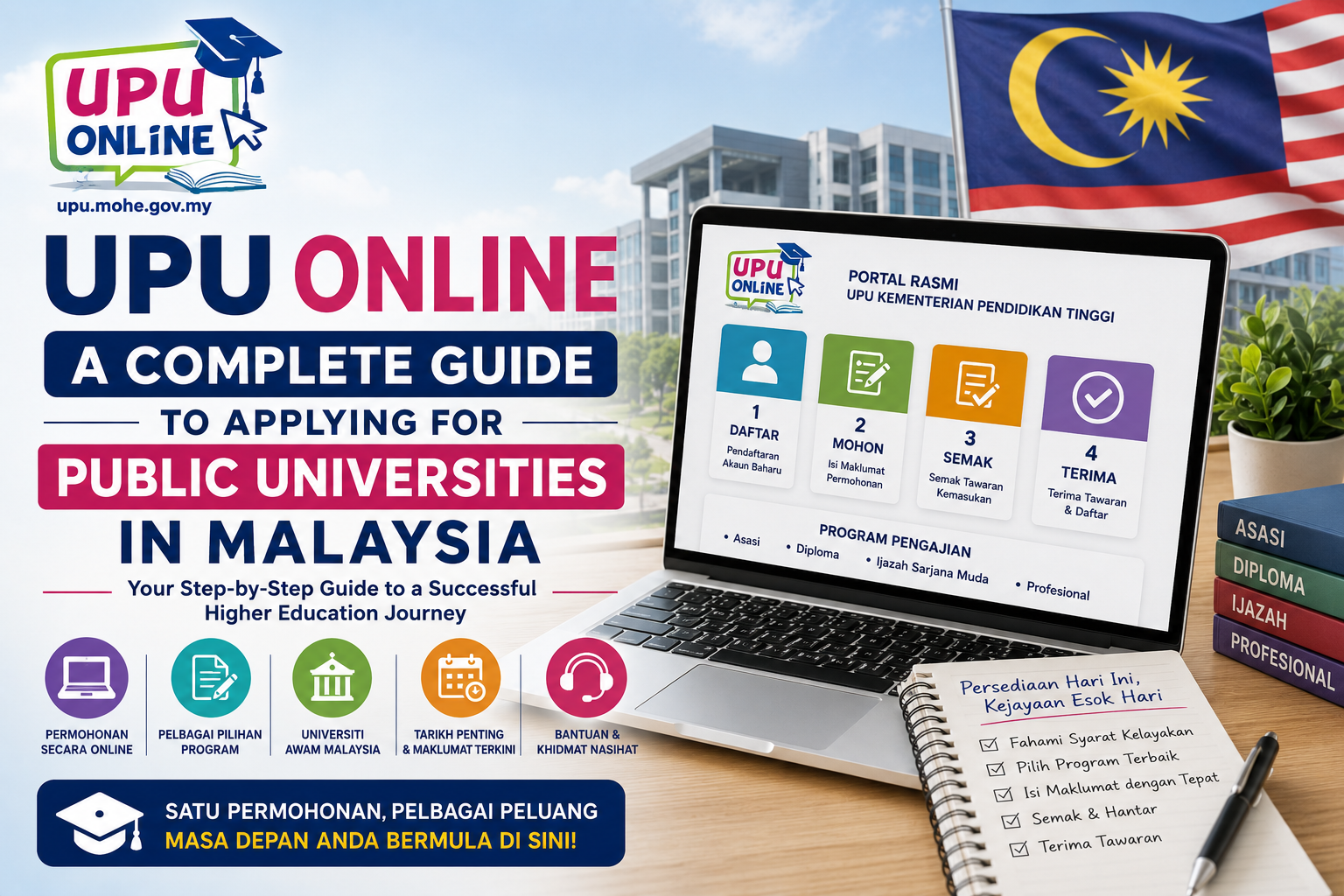
UPU stands for Unit Pusat Universiti, though the system has gone through several name changes and organisational shifts over the years. Today it is managed by the Bahagian Pengurusan Kemasukan Pelajar, commonly abbreviated as BPKP, under the Ministry of Higher Education. UPU Online is the official, centralised application platform used for admission into all public institutions of higher learning in Malaysia, including public universities, polytechnics, community colleges, and institutes under ILKA.
Before this centralised system existed, students had to submit separate manual applications to each university individually, which was time consuming, inconsistent, and prone to error. UPU Online was introduced to simplify that process by allowing a single application to cover multiple institutions and programmes at once.
Who Can Apply
Many people assume UPU Online is only for students fresh out of SPM or STPM, but the system actually accommodates several categories of applicants. Beyond SPM and STPM leavers, this includes candidates coming from matriculation programmes, foundation studies, diploma holders seeking further study, and other equivalent qualifications recognised by the Ministry. Each category has its own set of eligibility requirements, deadlines, and available programmes, so it is important for applicants to identify which category they fall under before beginning the process.
Getting Started With the Unique ID
The first practical step for any applicant is obtaining a Unique ID PIN, which acts as the access key to the UPU Online portal. This PIN must be purchased through Bank Simpanan Nasional, either at a physical branch, through a BSN ATM, or via the myBSN internet banking platform. The PIN typically costs a small fee, generally in the range of RM10 to RM15 depending on the year it is announced, and remains valid throughout the entire application period for that intake session.
Once the PIN has been purchased, students use it together with their identification card number to register an account on the official UPU Online portal. After registration, applicants must verify their account, usually through an email confirmation code, before they are able to log in and begin filling out their application.
Filling Out the Application
The application itself requires several categories of information. Applicants need to provide personal details such as their full name, identification number, address, and contact information. They must also enter their academic results accurately, whether from SPM, STPM, matriculation, foundation, or diploma studies, along with any relevant cocurricular achievements, since these can factor into the overall selection process. Information about parents or guardians, household income, and number of dependents is also typically required, particularly for programmes tied to financial aid or specific quotas.
Applicants are generally allowed to select up to twelve programmes of study based on their interests and eligibility. It is usually recommended that students arrange their choices strategically, placing their most desired programme at the top while mixing in a combination of competitive and more attainable options further down the list. This balanced approach improves the likelihood of receiving an offer even if the top choice proves too competitive.
How Selection Works
The UPU system uses a merit based selection process. According to official information, the bulk of a candidate’s overall merit score, typically around ninety percent, is based on academic performance, while the remaining portion accounts for cocurricular activities. This merit score determines which programmes and institutions a student is eligible to be matched with, and it varies each year depending on the number of applicants and the number of available places in any given programme.
Because the exact merit cutoff for any programme changes annually, students are often encouraged to use the official merit calculator available on the UPU Online portal. By entering their SPM or STPM results into this tool, applicants can get an estimated merit score instantly, which helps them gauge how competitive their application might be for specific programmes. It is worth noting that these estimates are based on historical trends only and are not official guarantees, since real merit thresholds shift based on that year’s applicant pool and available capacity.
Important Dates and Phases
The UPU Online timeline typically unfolds in a few key phases. There is an initial application phase where students submit their first set of programme choices. This is often followed by an update phase, during which applicants can revise or reorder their selections before a final deadline. After official results are announced, many students choose to adjust their preferences once more, either aiming for more competitive programmes if their results were favourable, or considering alternative pathways such as polytechnics or community colleges if they were not.
Results are generally announced sometime between July and August, though exact dates shift from year to year according to the official calendar released by the Ministry. Students who are unsuccessful in their initial application are typically given the opportunity to file an appeal, though most systems only allow one appeal per applicant, so it is important to make that submission count.
Common Mistakes to Avoid
Many students unintentionally hurt their own chances by making avoidable errors during the application process. Common mistakes include applying for programmes that do not match their academic qualifications, submitting inaccurate personal or academic information, and failing to double check all entries before hitting the final submit button. Providing false or inaccurate information can lead to outright rejection of an application, so accuracy at every stage matters enormously.
It is also advisable for applicants to keep copies of their submitted application and supporting documents, including their MyKad, academic result slips, and any cocurricular certificates, as these may be needed for verification later in the process.
Helpful Official Resources
For students who feel overwhelmed by the process, two official resources tend to be particularly useful. The e Panduan UPU is an official document that lists complete admission requirements for every programme, at every institution, for every category of applicant. This guide is considered essential reading for anyone trying to understand exactly what qualifications a specific programme demands. Separately, the UPU Pocket mobile application, developed officially by BPKP, allows students to access key information and updates directly from their smartphones, and is available for download on both the Google Play Store and the App Store.
Students who run into technical issues or have specific questions about their application can also reach out to the Bahagian Pengurusan Kemasukan Pelajar through their official hotline or email, or use the live chat feature available directly on the UPU Online portal for real time assistance.
Final Thoughts
Applying to a public university, polytechnic, or community college in Malaysia hinges almost entirely on successfully navigating UPU Online. While the system itself is centralised and standardised, small missteps during registration, documentation, or programme selection can significantly affect an applicant’s outcome. Taking time to understand the Unique ID purchase process, entering accurate academic and personal information, using the official merit calculator to set realistic expectations, and referring to trusted guides along the way can make the entire experience far less stressful. For students and parents trying to make sense of deadlines, eligibility categories, and selection criteria, staying informed through reliable resources remains one of the most effective ways to approach this important milestone with confidence.