Women-Centric Welfare Schemes: A State-Wise Comparison
Over the past few years, Indian state governments have shown a growing commitment to women’s financial independence. From direct bank transfers to skill-building support, these programs are designed to reduce the economic gap many women face, especially in rural and semi-urban households. Odisha’s Subhadra Yojana is one of the most talked-about examples of this shift, but it is far from the only one. Understanding how different states are approaching the same problem can help beneficiaries make sense of their own scheme, and can also highlight what works well across regions.
Why States Are Investing in Women-Focused Cash Transfers
Financial dependency has long been one of the biggest barriers to women’s participation in household and community decision-making. When a woman has access to her own income, even a modest amount, she typically gains more say in family spending, education choices for her children, and her own healthcare. Recognizing this, several state governments have moved toward direct benefit transfer (DBT) models, where money is sent straight into a woman’s Aadhaar-linked bank account rather than routed through intermediaries. This reduces leakage, cuts down on paperwork disputes, and makes the process more transparent for everyone involved.
Odisha was one of the more recent states to formalize this approach through Subhadra Yojana, a scheme aimed at women between 21 and 60 years of age from economically weaker sections. Eligible women receive a fixed amount annually, split into two installments, over a period of several years. The scheme also ties disbursement dates to culturally significant occasions, which has helped build public awareness and trust in the program.
How the Application and Verification Process Usually Works
Most of these schemes follow a fairly similar structure, even though the amounts and eligibility rules differ from state to state:
- Applicants register either online through the official state portal or offline at an Anganwadi centre or Common Service Centre (CSC)
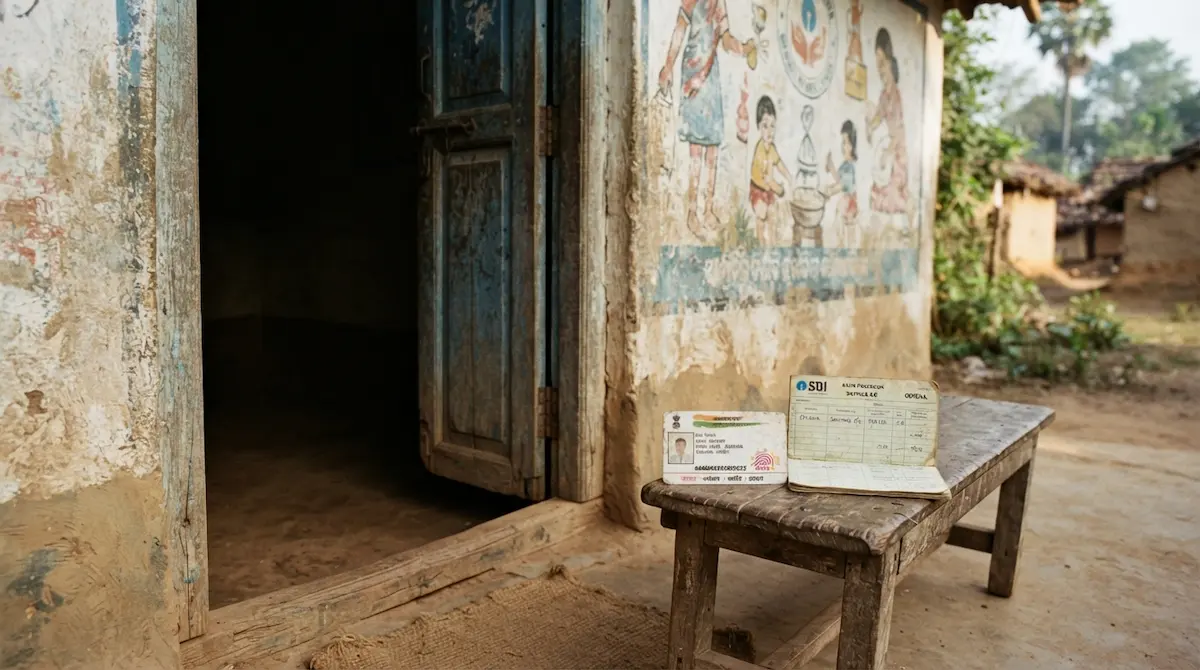
- Aadhaar and bank account details are verified to prevent duplicate or fraudulent claims
- A beneficiary list is published, which applicants can check using their application number, Aadhaar number, or registered mobile number
- Payments are released in fixed installments, often tied to specific dates or festivals
This structure keeps the process consistent and easier to audit, but it also means that a single mismatched detail, such as an outdated bank account or an unlinked Aadhaar number, can delay a woman’s payment. Anyone applying for such a scheme should double check that their KYC details are current before submitting an application.
Looking Beyond Odisha: Other States Doing Something Similar
Odisha isn’t alone in this effort. Several other states have rolled out comparable programs, each shaped by local priorities and budget constraints. West Bengal’s Lakshmir Bhandar offers monthly financial support to women heads of households. Madhya Pradesh’s Ladli Behna Yojana was among the earlier large-scale versions of this model. And in Maharashtra, the state government runs the Ladki Bahin Yojana, a monthly cash assistance program for eligible women that has become one of the most widely discussed welfare initiatives in the western region of the country.
What makes these programs worth comparing is not just the amount of money involved, but how each state structures eligibility, verification, and grievance redressal. For instance, some schemes require income certificates while others rely purely on existing ration card categories. Some allow online-only applications, while others insist on physical verification at the block level. Beneficiaries who move between states, or who want to understand how their own state’s approach stacks up, often look at multiple scheme websites to compare application steps, common rejection reasons, and fraud warnings before applying.
Common Challenges Across These Schemes
Despite the good intentions behind these programs, beneficiaries across states tend to run into a similar set of problems:
- Bank account linking issues — Aadhaar-seeded accounts that aren’t updated can cause payments to bounce back or get delayed indefinitely.
- Fake websites and scam links — Because these schemes attract high search traffic, fraudulent look-alike domains and WhatsApp messages claiming to offer “urgent eKYC” links are unfortunately common. Applicants should always verify they’re on the correct government domain before entering personal details.
- Name mismatches — Small spelling differences between Aadhaar records and bank records can knock an otherwise eligible applicant off the beneficiary list.
- Confusion between official and unofficial sources — Many informational websites, including this one, cover these schemes to help explain the process in simpler language, but they are not the official application portals. It’s important for readers to know the difference.
What Beneficiaries Can Learn From Each Other
One of the more underrated benefits of having multiple states run similar schemes is that best practices tend to spread. When one state simplifies its verification process or adds a mobile app for status tracking, others often follow with similar upgrades over time. Beneficiaries themselves also benefit from cross-state awareness. A woman who has gone through the Subhadra Yojana process in Odisha, for example, will find a lot of familiar territory if she later needs to understand how a scheme like Ladki Bahin Yojana works in Maharashtra, since the underlying logic of Aadhaar verification, beneficiary lists, and installment-based payouts is largely the same.
This is also why comparing schemes side by side is useful beyond simple curiosity. It helps policy watchers, researchers, and even state governments themselves identify which features are working, where common bottlenecks appear, and how digital verification can be made faster without compromising security.
Practical Tips for Anyone Applying to a State Welfare Scheme
Regardless of which state scheme you’re applying under, a few habits go a long way in avoiding delays:
- Keep your Aadhaar and bank passbook details handy before starting the application
- Apply only through the official state portal, and bookmark it to avoid typing the URL from memory
- Save your application number immediately after submission
- Check the beneficiary list periodically instead of waiting for a notification
- Report suspicious messages or calls asking for OTPs to the relevant helpline rather than responding directly
Final Thoughts
Programs like Subhadra Yojana reflect a broader, encouraging trend across India: state governments increasingly see direct financial support to women as a practical tool for reducing household poverty and improving decision-making power within families. As more states experiment with their own versions of this model, from Odisha to Maharashtra to West Bengal, beneficiaries stand to gain from faster processes, better fraud protection, and clearer communication over time. Staying informed, whether about your own state’s scheme or how neighbouring states are handling similar programs, remains one of the simplest ways to make sure you don’t miss out on support you’re entitled to.