Ujian Psikometrik SPA: A Complete Guide for Malaysian Government Job Candidates
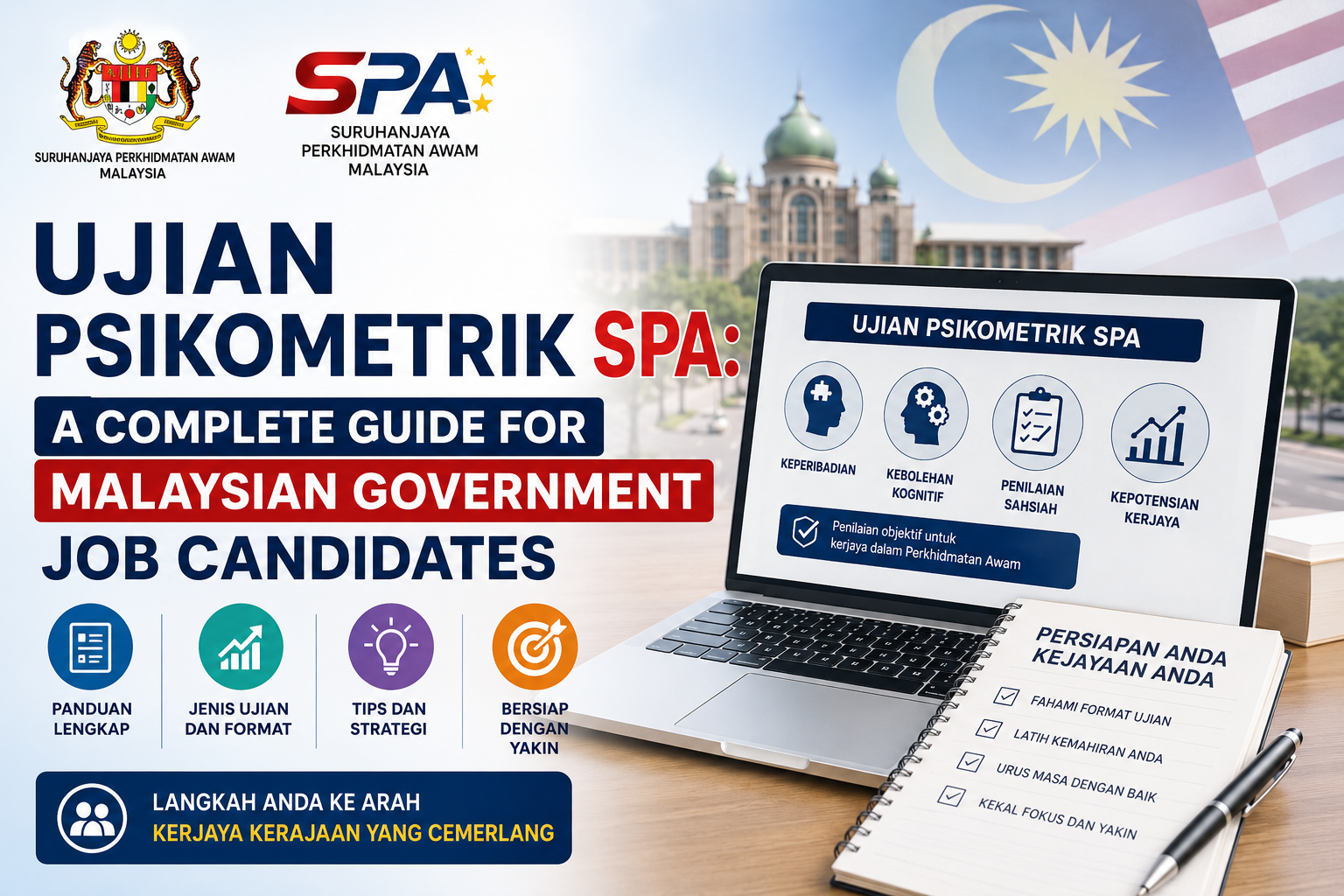
Anyone applying for a position in Malaysia’s civil service will, at some point, be asked to sit for a psychometric test as part of the selection process handled by the Suruhanjaya Perkhidmatan Awam (SPA), the Public Service Commission. For candidates preparing for this stage, resources such as http://ujianpsikometrik.com.my offer sample questions, explanations, and preparation tips aimed at helping applicants understand what to expect before exam day. This article explains what the psychometric test involves, why it matters in the government hiring process, and how candidates can prepare effectively.
What Is the SPA Psychometric Test?
The psychometric test, known in Malay as Ujian Psikometrik, is a standardised assessment used by SPA to evaluate personality traits, behavioural tendencies, and, in some cases, cognitive ability in candidates applying for public sector positions. Unlike academic examinations that test knowledge or technical skills, a psychometric test is designed to measure how a person is likely to think, react, and behave in different situations, particularly those relevant to public service work.
SPA uses this assessment as one component of a broader selection process that typically also includes an interview and, for certain positions, additional written or physical tests. The psychometric component helps the commission gauge whether a candidate’s personality profile fits the demands of the role they are applying for, whether that role involves front-line public interaction, administrative work, enforcement duties, or technical positions within various government agencies and ministries.
It’s worth noting that the test is not designed to have a single “correct” answer in the way a knowledge-based exam does. Instead, it is built to reveal consistent patterns in how a candidate responds to statements about their own behaviour, attitudes, and preferences.
Types of Questions Candidates Can Expect
Psychometric tests used in the Malaysian public sector selection process generally fall into a few recognisable categories:
Personality and behavioural statements. Candidates are presented with statements describing feelings, habits, or reactions, and asked to indicate their level of agreement, often on a scale such as “Sangat Tidak Setuju” (Strongly Disagree) through “Sangat Setuju” (Strongly Agree). An example might describe a tendency toward empathy, leadership, or emotional response in certain situations.
Yes/No behavioural questions. Some sections use simpler binary questions asking candidates to select “Ya” (Yes) or “Tidak” (No) in response to a statement about personal habits, preferences, or past behaviour.
Situational judgement items. These present a short scenario and ask candidates how they would typically respond, helping assessors understand decision-making tendencies under everyday or workplace pressures.
Consistency-check items. Because the test aims to capture genuine personality patterns, similar questions are sometimes repeated in different forms throughout the assessment. This is intentional, and it allows the scoring system to check whether a candidate’s answers are internally consistent rather than randomly selected or deliberately manipulated.
Why the Test Matters in the Selection Process
For many candidates, the psychometric test can feel like one of the more unpredictable stages of the SPA application process, mainly because it does not test subject knowledge in the way a written exam does. However, it plays an important role for two main reasons.
First, it helps government agencies match candidates to roles where their natural behavioural tendencies are likely to be a good fit. A position requiring frequent public interaction, for instance, may benefit from candidates who show strong patience and emotional regulation in their responses, while roles requiring independent decision-making may value candidates who demonstrate initiative and confidence.
Second, because civil service positions often come with long-term public responsibility, the psychometric stage is one of the tools SPA uses to build a fuller picture of a candidate beyond academic qualifications and interview performance alone. In many recruitment pathways, passing the psychometric test is a prerequisite before a candidate can proceed to the interview stage, which makes preparation genuinely useful rather than optional.
How to Prepare for the Psychometric Test
While the test is not a conventional knowledge exam, there are still meaningful ways candidates can prepare and reduce anxiety before sitting for it.
Understand the format in advance. Reviewing sample questions and answer scales beforehand helps reduce the unfamiliarity that often causes candidates to second-guess themselves during the actual test. Knowing roughly how many sections there are and how much time is typically allocated also helps with pacing.
Answer honestly and consistently. Because many psychometric tests include repeated or closely related questions in different wording, attempting to guess a “desirable” answer and deviating from genuine responses can create inconsistencies that are flagged during scoring. Candidates are generally better served by answering truthfully based on how they actually tend to think or behave, rather than trying to predict what the assessors want to see.
Manage time and reduce test-day stress. Since many psychometric assessments are timed, practising with sample questions under similar time constraints can help candidates build familiarity with the pace required. Getting adequate rest before the test day and arriving early to avoid last-minute stress are also practical steps that make a noticeable difference in performance.
Reflect on relevant work scenarios. For situational judgement questions in particular, thinking through how one would typically respond to common workplace situations, such as handling a dissatisfied member of the public or working under a tight deadline, can help candidates respond more naturally and confidently.
Avoid relying on “leaked” or so-called guaranteed questions. Some websites and social media pages claim to sell actual exam questions or guarantee a pass. Reputable preparation resources are usually explicit that they are not affiliated with SPA and that their materials are for practice purposes only, not genuine leaked content. Candidates should treat any site or seller claiming to have real exam questions with caution, since using such material carries both ethical and practical risks, including disqualification if discovered.
A Few Practical Tips for Test Day
Arriving well ahead of the scheduled time allows candidates to settle in, complete any required registration or verification steps, and reduce last-minute stress that could otherwise affect concentration. Bringing the required identification documents and any confirmation letters issued by SPA is essential, since incomplete documentation can cause delays or, in some cases, disqualification from sitting the test. Reading each question carefully before answering, rather than rushing through the assessment, helps maintain the kind of consistency that scoring systems are designed to detect. Finally, treating the test as an opportunity to present an honest and complete picture of oneself, rather than as a puzzle to be “solved,” tends to produce both better results and a less stressful overall experience.
Conclusion
The SPA psychometric test is a standard part of Malaysia’s public sector recruitment process, designed to assess personality traits and behavioural tendencies rather than academic knowledge. While it can feel unpredictable to first-time candidates, understanding the test format, practising with sample questions, and answering honestly and consistently are the most reliable ways to approach it with confidence. Combined with solid preparation for the interview stage that typically follows, a clear understanding of what the psychometric test measures can help candidates put their best, most authentic selves forward as they pursue a career in the Malaysian civil service.